


BIS issues seed bank framework to preserve climate-resilient crops
Compliance would allow community seed banks to function as decentralised repositories, enabling local farmers to collect, store, and exchange locally adapted seeds
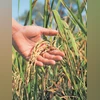 "Agriculture, farm sector, Crops")
Representative image from file.
Listen to This Article
Bureau of Indian Standards (BIS) has published a new voluntary management framework for community seed banks, aimed at protecting traditional crop varieties as climate change threatens the country's agricultural heritage.
The standard, IS 20201:2026, lays out requirements covering the full lifecycle of seed bank operations 'from collection and viability testing to storage, documentation and regeneration practices' and is available free of charge on the BIS portal.
The consumer affairs ministry said native seed varieties, many of which carry traits such as drought tolerance, disease resistance, and high nutritional value, represent a critical strategic resource for an agrarian economy grappling with erratic rainfall and rising temperatures.
"By offering a standardised operating protocol for decentralised, community-led seed banks, IS 20201:2026 aims to promote conservation of these indigenous varieties," the ministry said in a statement.
The certifiable standard was developed under the convenorship of the ICAR-National Bureau of Plant Genetic Resources, with inputs from the National Biodiversity Authority, the Protection of Plant Varieties and Farmers' Rights Authority, Rythu Sadhikara Samstha, and the BAIF Development Research Foundation.
Also Read

 "FIIs turn traders on Dalal Street")
 "Ethanol")
 "PNG pipelines")
 "agroforestry, forest, agriculture (Photo: Pexels)")
 "Consumption in aluminium cans is 3-4% of the total")
It aligns with existing government programmes, including the National Food Security and Nutrition Mission, which offers one-time assistance of 50 lakh rupees for establishing community seed banks, as well as statutory protections under the Protection of Plant Varieties and Farmers' Rights Act, 2001, and the Biological Diversity Act, 2002.
Compliance would allow community seed banks to function as decentralised repositories, enabling local farmers to collect, store, and exchange locally adapted seeds. This measure, the ministry said, would protect smallholders' livelihoods and build grassroots food security.
BIS, established under the BIS Act, 2016, is India's national standards body. All community seed banks, cooperative societies, and agricultural stakeholders have been encouraged to adopt the guidelines.
(Only the headline and picture of this report may have been reworked by the Business Standard staff; the rest of the content is auto-generated from a syndicated feed.)
More From This Section
 "Yogi Adityanath, yogi, UP CM")
 "Opendoor")
 "India real estate price hike 2026, realty developers margin pressure India, construction cost increase steel prices India, West Asia conflict impact housing sector, Mumbai real estate cost escalation, Delhi NCR housing prices outlook, supply chain di")
 "crude oil, oil refinery")
 "cancer vaccine")
Don't miss the most important news and views of the day. Get them on our Telegram channel
First Published: Jun 11 2026 | 7:42 PM IST